

What Influenced Robert Smith and The Cure? Music, Books and Film
Updated: Sep 20
by Dave Anthony
Host, Garage to Stadiums Music History podcast
What influenced Robert Smith and The Cure? Smith’s creative identity drew from an extraordinary combination of music, cinema and literature. Emerging from the urgency of Britain’s late-1970s punk scene, The Cure absorbed ideas that extended far beyond contemporary records. These different artistic worlds helped create one of rock’s most distinctive voices.
On the Garage to Stadiums Music History podcast episode The Story of The Cure, author Ian Gittins, whose books include The Cure: A Perfect Dream, joined host Dave Anthony to examine the influences that shaped Robert Smith’s broad and enduring body of work. Its longevity is reflected in the continued use of The Cure’s music in films, streaming series and advertising.
EXPLORE GARAGE TO STADIUMS
Follow the podcast
Follow GTS on Apple, Spotify and YouTube
Follow our social channels
Incredible rock history facts straight to your feed on our various social channels. Instagram, YouTube, X and more.
EXPLORE MORE OF THE CURE
Read The Cure episode transcript
See the full Story of The Cure transcript
Listen to The Cure playlist
On our Story of The Cure episode, author Ian Gittins (The Cure: A Perfect Dream) joined Dave Anthony to discuss the wide range of influences that inspired Robert Smith to create a wide ranging and timeless catalog. Proof of its longevity is the continual use of The Cure’s tracks in movies, streamed programs and advertisements.

Firstly, music gave Robert Smith the vocabulary. From David Bowie's fearless reinvention to Jimi Hendrix's sonic experimentation, from the raw energy of the Buzzcocks to the atmospheric darkness of Siouxsie and the Banshees, Smith absorbed ideas about sound, structure and artistic freedom.

Next, film gave him the visual language. The dreamlike storytelling of David Lynch, the experimentation of French New Wave cinema, the psychological intensity of horror films and his groundbreaking collaborations with director Tim Pope helped shape The Cure's surreal imagery and emotional landscapes.
And lastly, highly regarded literature gave him philosophical depth. The existential questions of Albert Camus, the alienation of Franz Kafka, the surreal worlds of Lewis Carroll, the moral darkness of Joseph Conrad and the poetry of Charles Baudelaire provided the themes that would define Smith's lyrics: identity, isolation, love, fear and the complexity of human relationships.
The result was a band unlike any other. The Cure could create devastatingly beautiful pop songs, haunting gothic soundscapes and deeply personal reflections on the human condition, all because Robert Smith approached music not as a genre, but as a conversation between different forms of art. To understand The Cure is to understand the artists, writers and filmmakers who shaped Robert Smith's imagination. Together, those influences explain why The Cure never sounded quite like anyone else.
Who Influenced Robert Smith's Music?

David Bowie, Jimi Hendrix and his Brother’s Record Collection
Robert Smith's earliest musical education happened at home. His older brother introduced him to an extraordinary range of artists, ensuring Smith never viewed music through a single stylistic lens. One afternoon might feature Jimi Hendrix's adventurous guitar work, while another might be devoted to the raw power of the Buzzcocks or the experimental edge of David Bowie.
That musical curiosity became one of Smith's defining characteristics. Rather than imitating one artist, he absorbed ideas from many and filtered them into something uniquely his own.
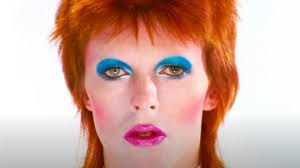
Bowie, punk and the birth of The Cure
No artist had a greater impact on Smith than David Bowie. Bowie's glam period demonstrated that image and music could become inseparable artistic statements, while his Berlin Trilogy revealed how atmosphere and emotion could matter more than conventional rock structures.

Punk and Siouxsie and the Banshees
When punk exploded in Britain during the late 1970s, Smith embraced its urgency without adopting its limitations. Early Cure recordings, particularly Three Imaginary Boys (1979), reflected the influence of the Buzzcocks, Elvis Costello, The Stranglers and the Sex Pistols. Their songs were concise, energetic and driven by angular guitars rather than elaborate solos. Bassist Simon Gallup also brought an important influence to the band's evolving sound. His melodic bass playing owed much to Jean-Jacques Burnel of The Stranglers, helping establish the flowing, hypnotic low-end that became one of The Cure's signatures.

As the band matured, Smith moved beyond punk's simplicity toward something far more atmospheric. Albums such as Seventeen Seconds, Faith and Pornography slowed the tempo and embraced haunting spaces, echoing guitars and emotional ambiguity. The emotional weight of Joy Division can be heard throughout these records, while Hendrix's experimental approach to guitar textures encouraged Smith to treat the instrument as a source of mood rather than virtuosity.
How Did Playing With Siouxsie and the Banshees Affect Robert Smith?
Another transformative period came when Smith briefly joined Siouxsie and the Banshees as guitarist. In Gittins's book Smith comments, "being a Banshee really changed my attitude to what I was doing." What did he mean by that? In our interview, Gittins posited "With The Cure, it was all about him. He was the, the principal songwriter, he was the guitarist, he was the singer. It really, it stood or fell on his efforts, and all the focus was on him. Um, I think with The Banshees, for a while he liked being the hired hand. He'd just go and sit and play the songs, and he wasn't the person... Siouxsie was taking the limelight, and he was... And also I think he just getting to work with other people."

By the late 1980s and early 1990s, The Cure were again evolving. Ethereal groups such as the Cocteau Twins and later shoegaze pioneers like My Bloody Valentine encouraged Smith to create vast sonic landscapes where shimmering guitars became emotional scenery rather than simply rhythm instruments. Albums like Disintegration perfectly captured that evolution, blending melancholy with breathtaking beauty.
Why Did The Cure Move From Dark Music to Pop Hits?
After the bleak album Pornography, Gittins suggested in our episode that Robert Smith felt there was a limit to continuing in the same dark direction. Producer Chris Parry challenged Smith to write a pop single. Smith accepted the challenge, producing “Let’s Go to Bed.”
That 1982 hit single began a decade-long run of radio-friendly pop hits like "The Lovecats", "In Between Days", "Close to Me" and "Just Like Heaven" that rapidly expanded The Cure's audience. Yet Smith had an incredible reaction to these hits. According to Gittins "I think he felt slightly ashamed of them.... even though it's a huge talent to write one of those songs. I think in, for a long, long time in his mind, great music or great art had to be, um, profound and deep and, and about examining the self and going deep into the soul, and not about singing, writing a song called The Lovecats and jumping about on MTV".
How Do Film and Visual Storytelling Connect With The Cure?
Director Tim Pope's influence on The Cure videos
That influence is evident in videos created with longtime collaborator Tim Pope, whose surreal humour and visual inventiveness perfectly complemented Smith's offbeat imagination. Songs such as "The Caterpillar" reveal this cinematic approach, blending whimsical imagery with unconventional musical arrangements to create miniature films in song form.
How Did David Lynch Influence the “Lullaby” Video?
If French cinema inspired Smith's visual creativity, The Cure videos often had other sources of inspiration. During the video shoot for "Lullaby," director Tim Pope revealed that both he and Smith drew upon the spooky, nightmarish spirit of David Lynch's 1977 film Eraserhead when conceptualizing the visuals. Lynch's dreamlike narratives, unsettling atmosphere and fascination with hidden psychological darkness closely mirror the video's feel.
The Cure's “Burn” and The Crow movie

Perhaps his curiosity with horror began with his recollections of his father reading him bedtime stories and turning them into haunting soundscapes with terrifying implications. Smith has been an enthusiastic horror fan throughout his life. His fascination extended far beyond mainstream horror films, even including notorious banned "video nasties" that became cult favourites during the 1980s.
That lifelong love of horror naturally found its way into The Cure's music. Songs frequently evoke nightmares, haunted memories and unsettling dream worlds rather than traditional ghost stories.
The connection between cinema and The Cure came full circle in 1994 when the band recorded "Burn" for The Crow soundtrack. The song's brooding atmosphere perfectly matched the film's gothic aesthetic, making it one of the band's most celebrated soundtrack contributions.
Which Books Inspired The Cure’s Songs?
What is “Killing an Arab” about?
Perhaps no literary influence has been discussed more than Albert Camus. In our episode, guest Ian Gittins discussed that one of The Cure's earliest songs, "Killing an Arab," was inspired directly by Camus's novel The Stranger. The book follows Meursault, an emotionally detached French Algerian who casually kills an unnamed Arab man and reacts with startling indifference.
Smith's song attempted to capture that emotional detachment rather than endorse violence. Nevertheless, many listeners misunderstood the title, leading to decades of controversy. Smith repeatedly explained that the song was an adaptation of Camus's existential philosophy rather than a political statement. In later performances, he often changed the lyric to "Killing Another" to avoid misunderstanding. He even resorted to pleading with radio stations to no longer play the tune due to its misunderstood premise.
What inspired the song "Charlotte Sometimes"?

Smith repeatedly transformed literature into music. Penelope Farmer's novel Charlotte Sometimes, about a schoolgirl who mysteriously exchanges places with another student across time, became one of The Cure's most beloved singles.
What inspired The Hanging Garden?
Robert Smith confirmed in a 1983 interview with NME (New Musical Express) that his song "The Hanging Garden" drew directly from his reading of Joseph Conrad's famous 1899 novella Heart of Darkness.
The book inspired the nightmarish imagery of the song, whose visions of tangled jungle landscapes, masked figures and psychological collapse echo Conrad's exploration of humanity's descent into moral darkness.
What inspired The Cure song "Piggy in the Mirror"?
Lewis Carroll's Through the Looking-Glass influenced "Piggy in the Mirror." Carroll's playful mirror world becomes something much darker in Smith's hands. Instead of discovering fantasy, the narrator confronts a fractured identity and overwhelming self-loathing.
Robert Smith discussed the song's origins during an interview with Melody Maker writer Steve Sutherland during the promotional tour for The Cure's 1984 album The Top. Smith linked it directly to Carroll’s 1871 classic and described the song as being about looking in the mirror and no longer recognizing the person staring back.
Charles Baudelaire's influence on the song “How Beautiful You Are”
The Cure’s “How Beautiful You Are” draws on Charles Baudelaire’s prose poem “The Eyes of the Poor.” Its central idea is the discovery that two people who love each other can respond to the same moment with profoundly different feelings.
In Baudelaire’s poem, a couple sitting at a Paris café encounter an impoverished family. The narrator feels sympathy, while his companion reacts with hostility. Their contrasting responses expose a gap in understanding that physical attraction and romantic affection cannot bridge.
Robert Smith had already been exploring a similar idea before reading Baudelaire. In a 1987 interview, he explained that the work brought the theme back to him and supplied the image of the man and child. Rather than simply borrowing a story, Smith found a literary expression of a question that already interested him: how well can we really know another person?
Turning that material into music required careful work. As Far Out recounts from Smith’s comments, he wanted the result to function as a song rather than a literary exercise. “How Beautiful You Are” brings that tension into focus, combining an inviting musical arrangement with a story of empathy, disappointment and emotional distance.
How Did These Influences Shape The Cure’s Musical Range?
Robert Smith's enduring brilliance lies not in copying his influences, but in weaving them together. Punk supplied the energy. Bowie offered artistic freedom. French cinema provided visual imagination. Horror films created an atmosphere. Literature delivered philosophical depth. Those seemingly unrelated inspirations became the DNA of The Cure.
More than four decades after their debut, the band's music still feels timeless because it was never built solely upon contemporary trends. Instead, Robert Smith drew from centuries of artistic expression, creating songs that reward listeners who return to them again and again, discovering new layers with every listen.
©2026 Garage to Stadiums Music History podcast


