

How Did Santana’s Music Evolve? From Woodstock to Supernatural
by Scott Campbell, Program Director
Garage to Stadiums Music History Podcast
Santana’s music evolved from a fusion of blues guitar and Afro-Cuban percussion into jazz fusion, mainstream rock and contemporary pop. Despite those dramatic changes, Carlos Santana’s distinctive guitar sound provided a consistent musical identity from Woodstock through Supernatural.
How Did Santana Create a New Latin Rock Sound?
Santana created a new rock sound by placing Carlos Santana’s blues-based guitar inside a rhythm section shaped by Afro-Cuban and Latin percussion. The guitar supplied the emotional phrasing associated with artists such as B.B. King, Otis Rush and Peter Green, while congas, timbales and layered rhythms gave the music a pulse rarely heard in mainstream American rock.

Music historian Ashley Kahn, who co-wrote Carlos Santana’s autobiography The Universal Tone: Bringing My Story to Light, explained on the Garage to Stadiums Music History podcast that Carlos possessed an unusual ability to absorb different traditions and transform them into a distinct sound An artist able to absorb different traditions and transform them into a distinct sound, Santana did not simply alternate between blues and Latin music. The band made the two traditions interact, with Carlos’s sustained guitar lines responding to congas, timbales, organ and drums.
The Santana Blues Band formed in San Francisco in 1966, but its best-known early lineup developed over time. Gregg Rolie’s Hammond organ and vocals added blues and soul, David Brown anchored the music on bass, Michael Shrieve brought a jazz-influenced approach to the drums, and percussionists Michael Carabello and José “Chepito” Areas gave the band its distinctive rhythmic identity.
The innovation was not simply the addition of percussion to conventional rock songs. Santana allowed rhythm, guitar and organ to interact as equal voices. Songs could move between tightly constructed melodies and extended improvisation without losing their momentum or accessibility.
That balance became unmistakable during “Soul Sacrifice” at Woodstock in August 1969. The performance demonstrated that instrumental music built around percussion and improvisation could command an enormous rock audience. The 1970 documentary carried that performance far beyond the festival and helped turn Santana’s musical experiment into an internationally recognized sound.
The first three albums refined the formula. Santana, Abraxas and Santana III combined instrumental exploration with memorable songs such as “Evil Ways,” “Black Magic Woman,” “Oye Como Va” and “No One to Depend On.” Santana’s achievement was not merely bringing Latin rhythms into rock. The band demonstrated that those rhythms could form the structural and commercial centre of the music.
EXPLORE GARAGE TO STADIUMS
Follow the podcast
Follow GTS on Apple, Spotify and YouTube
Follow our social channels
Incredible rock history facts straight to your feed on our various social channels. Instagram, YouTube, X and more.

Why Did Santana Abandon a Successful Formula?

Santana moved away from its successful Latin-rock formula because Carlos Santana valued musical and spiritual exploration more than repeating the sound that had made the band famous. Rather than produce another version of Abraxas, he increasingly looked to jazz artists such as John Coltrane, Miles Davis and John McLaughlin for new ways to use improvisation, space and extended musical structures.
This was not a rejection of Santana’s original identity. It was an attempt to expand it. The Afro-Latin percussion and expressive guitar remained, but conventional song structures became less important. Instrumental passages grew longer, jazz harmony became more prominent and commercial singles were no longer the primary objective.

That transformation became clear on Caravanserai in 1972. The album flowed as an immersive musical journey rather than a collection of self-contained radio songs. Columbia Records president Clive Davis reportedly warned that there was not a single “within a thousand miles” of the record, while manager Bill Graham considered the change a form of career suicide.
Commercially, their concerns were understandable. Santana had built a large audience through concise songs such as “Evil Ways,” “Black Magic Woman” and “Oye Como Va.” The new direction asked those listeners to follow Carlos into more meditative and demanding music. Gregg Rolie and Neal Schon eventually departed, later helping form Journey, and Santana entered a period of frequent lineup changes and less consistent commercial success.

Yet describing these years simply as a decline misses their importance. Caravanserai reached the Top 10 and later became one of Santana’s most critically admired albums. The period demonstrated that Carlos was willing to risk an established audience rather than allow Santana to become a fixed formula.
This period demonstrated the synthesizing instinct Kahn identified, but in a more radical form. Carlos absorbed ideas from jazz and spirituality without entirely abandoning Santana’s blues guitar or Afro-Latin rhythmic foundation. The detour therefore became another form of reinvention, even when it carried a considerable commercial cost.
How Did Supernatural Revive Santana’s Career?
Supernatural revived Santana’s career by introducing Carlos Santana’s recognizable guitar sound to a new generation through contemporary singers, songwriters and producers. The album did not ask Santana to imitate younger artists. Instead, it placed those artists inside a musical framework that Carlos could make unmistakably his own.
By the mid-1990s, Santana was generally viewed as a respected legacy act. The band had not produced a major mainstream hit in years, and its recent albums had sold poorly. Carlos still attracted concert audiences, but the music industry increasingly treated Santana as part of rock history rather than its commercial future.
Clive Davis, who had helped bring Santana to Columbia Records three decades earlier, recognized that Carlos possessed something more valuable than a fashionable sound: an instantly identifiable musical voice. His strategy was to connect that voice with artists who already had access to contemporary audiences.
The resulting album brought Santana together with Rob Thomas, Lauryn Hill, Dave Matthews, Everlast, Wyclef Jean, Eric Clapton and other artists from rock, pop, hip-hop and R&B. This collaboration-driven approach gave radio stations multiple ways to introduce Santana without reducing Carlos to a supporting musician. His guitar remained the connecting element across the album.

“Smooth” illustrates why the strategy worked. Rob Thomas supplied a contemporary vocal and pop-rock song structure, while Carlos’s guitar gave the recording its identity. The song sounded current enough for 1999 radio but distinctive enough that it could not have been mistaken for another artist’s record. “Maria Maria” extended that crossover by combining Santana’s guitar with R&B and hip-hop production.
The commercial response was extraordinary. Supernatural reached number one in numerous countries, while “Smooth” and “Maria Maria” both topped the Billboard Hot 100. At the 2000 Grammy Awards, Santana won eight awards in one night, tying Michael Jackson’s existing record. The wider Supernatural project received nine Grammys in total.
The comeback was not as disconnected from Santana’s earlier career as it first appeared. Carlos had spent decades adapting blues, Afro-Latin rhythms, jazz, rock and pop without losing the identity of his guitar. The years that appeared to have weakened Santana commercially had also taught him how to enter different musical settings without disappearing inside them.
That is what made Supernatural more than a successful comeback album. It converted Santana’s history of reinvention into a commercial advantage. Rather than restoring the band to its 1970 sound, the album proved that Santana could become contemporary again without pretending to be young.
How Did Santana Sustain the Comeback?
Santana sustained the momentum of Supernatural by embracing two identities at once: a contemporary collaborator and a guardian of an influential musical legacy. Carlos continued working with younger artists while touring a catalog that now connected several generations of listeners.
No later Santana album could reasonably be expected to reproduce the extraordinary success of Supernatural. The more important achievement was that its popularity did not disappear when the singles left the charts. It introduced younger listeners to Santana’s earlier recordings while giving longtime fans a reason to re-engage with the band.

Santana’s concerts could now draw from several distinct careers. An audience might hear the Latin-rock intensity of “Soul Sacrifice,” the blues atmosphere of “Black Magic Woman,” the jazz exploration of the 1970s and the pop accessibility of “Smooth” within the same performance. What had once seemed like an inconsistent catalog became a source of strength.
The band’s Las Vegas residency provided a permanent showcase for that multigenerational appeal and entered its fourteenth year at the House of Blues in 2026. Santana also revisited its origins with Santana IV in 2016, which reunited Carlos with Gregg Rolie, Neal Schon, Michael Carabello and Michael Shrieve for their first studio album together since Santana III in 1971.
Kahn argued that Santana’s longevity also reflects Carlos’s belief in music as a unifying force. “He sees his music as a weapon against the idea of borders and flags and nationalism, and anything that conceptually separates people,” Kahn explained. That outlook helps explain why Carlos remained so open to different genres, musicians and generations. Collaboration was not merely a commercial strategy introduced with Supernatural. It reflected his broader conviction that music should move freely across cultural boundaries.
These projects did not represent another reinvention on the scale of Supernatural. They demonstrated something different: Santana had reached the point where its contrasting eras could reinforce one another. Carlos no longer had to choose between the Woodstock pioneer, the jazz explorer and the crossover star. Each identity had become part of the same enduring legacy.
Why Has Santana’s Music Endured?
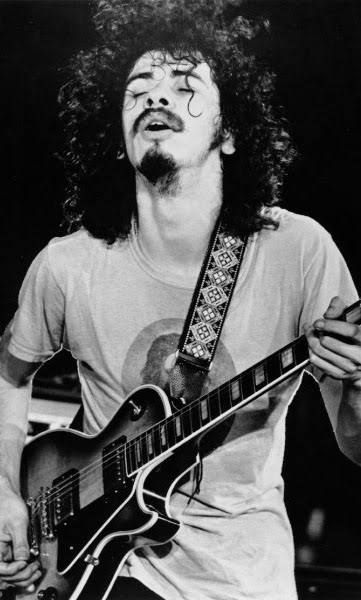
Santana’s music endured because Carlos Santana treated reinvention as part of his identity rather than as a temporary response to changing trends. The band’s sound evolved from Latin rock to jazz fusion, mainstream rock and contemporary pop, but Carlos’s lyrical, blues-based guitar provided continuity across every era.
Ashley Kahn described Carlos as “a true synthesizer,” meaning not the electronic instrument but an artist who absorbed different musical styles and combined them openly into something recognizable as his own. That ability explains how Santana could change genres, musicians and audiences without completely severing the connection between one era and the next.

Most artists protect one successful identity for fear of losing the audience built around it. Santana repeatedly risked that audience by moving into unfamiliar musical territory. Some of those decisions brought enormous commercial success, while others cost the band listeners. Together, however, they created a catalog broad enough to reach people with very different ideas of what Santana represents.
A listener drawn to the rhythmic intensity of Abraxas and one introduced to Santana through “Smooth” may appear to admire two different artists. The fact that both still recognize Carlos Santana’s musical voice is the clearest measure of his achievement. Reinvention did not weaken Santana’s identity. It became that identity.
© 2026 Garage to Stadiums Music History Podcast. All rights reserved.


